
Aging Missiology
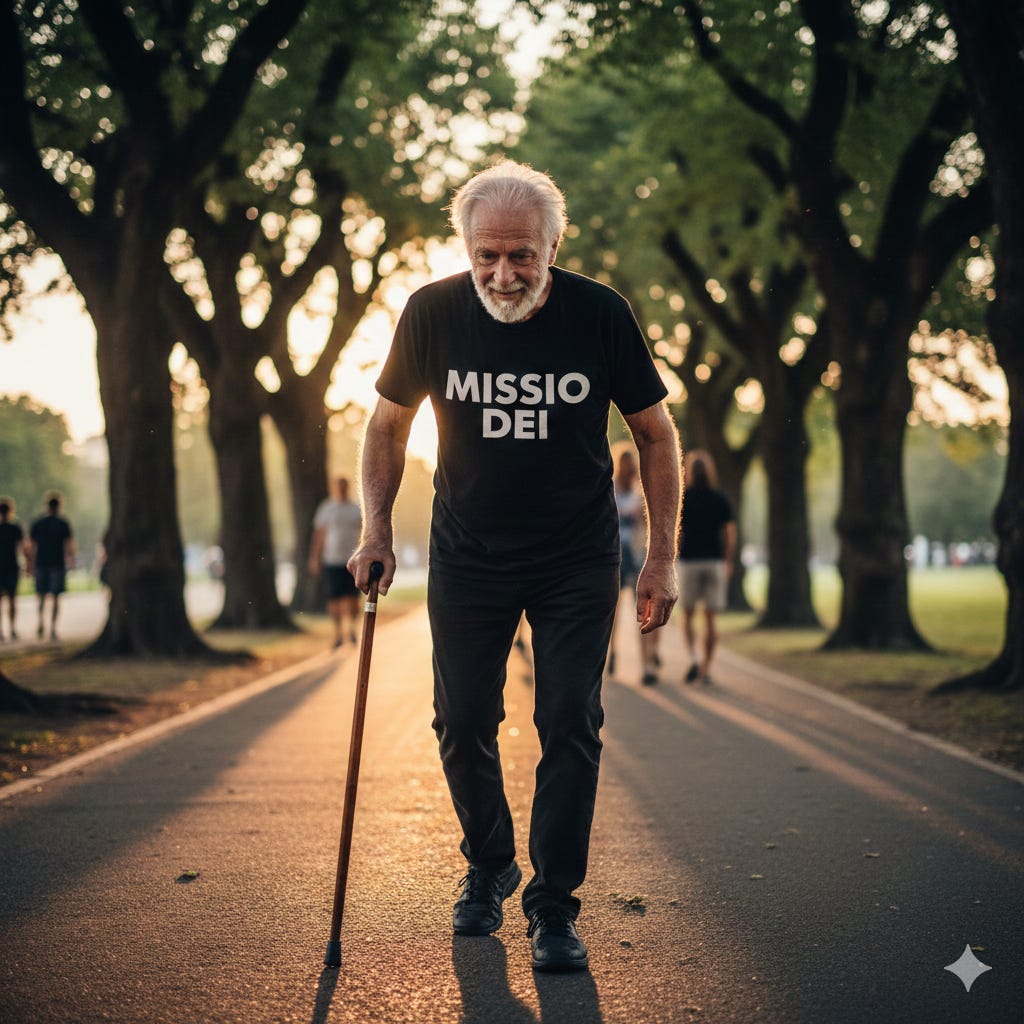
How relevant is Missio Dei in a world that is well past modernity?

Before I delve into today’s topic…
I want to give you an update on this substack. The past few weeks have seen some significant growth:

There are now 721 subscribers. While this is not in the thousands and I realize the reach is limited, I also am aware of the quality of my readers. I am not trying to flatter you, but I get about 10 to 15 personal emails per week from posts, and the quality of interaction is really impressive. By the way, I appreciate the emails, but I appreciate the public comments even more.
My goal is to improve “public missiology” - an open discussion about missiology in the evangelical church. I hope to continue to leverage insights from my role at Missio Nexus to elevate the evangelical missions movement. If you want to help, please reshare these posts with others when you feel they are helpful. I appreciate you, and I thank you for reading and interacting. Okay… on to today’s topic.
Aging Missiology
Lenin probably didn’t say it, but is credited with the quote, “There are decades where nothing happens; and there are weeks where decades happen.” The past two weeks feel a bit like one of these time-compressed decades. The consequential military intervention in Venezuela, what looks like the inevitable fall of the Iranian mullahs, and the continuing shift in the US stance toward Europe have stormed into 2026. These things are in alignment with what many have written about regarding deglobalization, including me. Deglobalization is going hand in hand with a rising indigenization and regionalization in mission.
I continue to think that the dominant framework for global mission, Missio Dei, is on its last legs. The Nicene Creed happened for a reason, to address the challenge of Arianism. The Nestorian and Monophysite controversies made the Chalcedon Council necessary. The Reformation occurred because of corruption in the Catholic Church. Theological frameworks are often reactions and corrections to contemporary shifts in theology and culture. What gave rise to Missio Dei missiology? Modernism and scientific missiology.
Missio Dei was developed in the early one third of the 20th century but really was cemented in 1952 at the Willingen conference. This event was held in Germany and was a landmark meeting of the International Missionary Council (IMC), a now defunct association. It changed how missiology understood the role of the church in mission, cementing Missio Dei and unseating Missio Ecclesia.
Modernity was the promise that mankind could engineer themselves (through rationality) to a better future. Prior to Missio Dei, missions was mostly seen through the lens of “Missio Ecclessia” in which the church had a mission. By introducing Missio Dei, theologians were attempting to address the intrusion of modernity into the theological space and declare that mission was what God was doing, not man. Human agency, a feature of modernity, had crept into mission. Missio Dei was a correction of this in stating that God, not the church, was on mission. Here we are now, in 2026, a full century of significant philosophical change removed from the early days of Missio Dei.
The needs are different and Missio Dei has only partially fulfilled its promise.
It does not appear to me that Missio Dei has helped us obey the command of Jesus to disciple the nations. When people ask me what is the weakness in the North American missions movement my answer is, “the lack of involvement by most senior pastors in churches.” When we substituted Missio Ecclessia with Missio Dei, did we neuter the involvement of local churches? We still struggle with the dilemma posed by a gospel of demonstration versus a gospel of proclamation - Missio Dei did not help with this. The paltry amount of giving that is focused on the least reached points to a broken paradigm of mission, and Missio Dei has played a role in this, I believe.
I do not know what modifications (or wholesale replacement) is in store for Missio Dei missiology. It has served the concept of a “globalized church” well. I would say that the high mark for Missio Dei was the 2010 Lausanne meeting in which the concept was front and center and heavily influenced the Capetown Commitment. Now, 15 years later, are we still feeling like this event propelled the movement forward? I think we might say “yes” in some respects, and “no” in others. I would add that Missio Dei was developed during a time in which Westerners dominated world mission. Things have changed.
Last year, there was a spate of articles making the claim that Cleopatra lived closer to the invention of the iPhone than she did to the building of the pyramids. There’s a little nuance here, but it’s true. You are chronologically closer to Cleopatra than she was to the building of the pyramids, but we tend to just lump all that “old stuff” into a mental bucket called “old stuff.”
Consider that Amy Carmichael lived closer to the time of the Willingen Conference than you do. She moved to her first post in Japan in 1893, the year the first car was introduced to America, where horses were the primary mode of transportation. That was 59 years before Willingen. Today is 73 years after Willigen. I live in Florida where you can see a rocket launch almost every third day of the year. It will soon be every day.
My point is that Missio Dei has been around a long time and the world has changed. The global distribution of Christians, since 1952, is massively different. We are running on a missiological paradigm that is getting long in the tooth.
It could be that recent events represent one of Lenin’s “decades.” It makes me wonder when our missiology will catch up.
I was just thinking the other day that missional theology and the mission church movement seems to have had its day, and is inadequate for the mission challenges of this era. We need fresh language and imagination in this space.
Ted love your innovation to help move the church from being comfortable.
Our Lord has called us as Luke 9:23 says. I loved this comment…
We still struggle with the dilemma posed by a gospel of demonstration versus a gospel of proclamation - Missio Dei did not help with this. The paltry amount of giving that is focused on the least reached points to a broken paradigm of mission, and Missio Dei has played a role in this, I believe.