
I Am a Dunker
How far back do you have to go to find immigration in your past?

[image found on https://www.findagrave.com/]
Everybody, they say, has slaves in their family tree. Because slavery has been such a prominent part of human civilization, we all are marked by it at some point in our family history. For most of us, the question isn’t if we had slaves in our family tree, but how far back do we have to dig to find that connection?
Like many Americans, I have mongrel ancestry. My mom’s side of the family is Scandinavian. We were Vikings at one point. In the 1800s, my ancestors were farmers from Norway, Sweden, and Denmark (yes, all three are in the mix). Because of primogeniture, they most likely decided to leave Europe to come to the United States, motivated by the Homestead Act of 1862. Within the next decade or two, many European immigrants in the United States would claim their 160 acres, as did my forebearers. They settled in central Wisconsin, built a crude home, and eventually became owners of that property. Over a million and a half homesteads, representing some 270 million acres, were deeded by the federal government to these homesteaders over a 72-year period.
My ancestors were clearly economic immigrants, coming to the United States to better their lives. “Ah, Ted, but they didn’t come to farm the welfare system,” you might object. But they kind of did. Rather than a monthly check or a free apartment, they got free land. To farmers of Viking ancestry, that was a valuable government program.
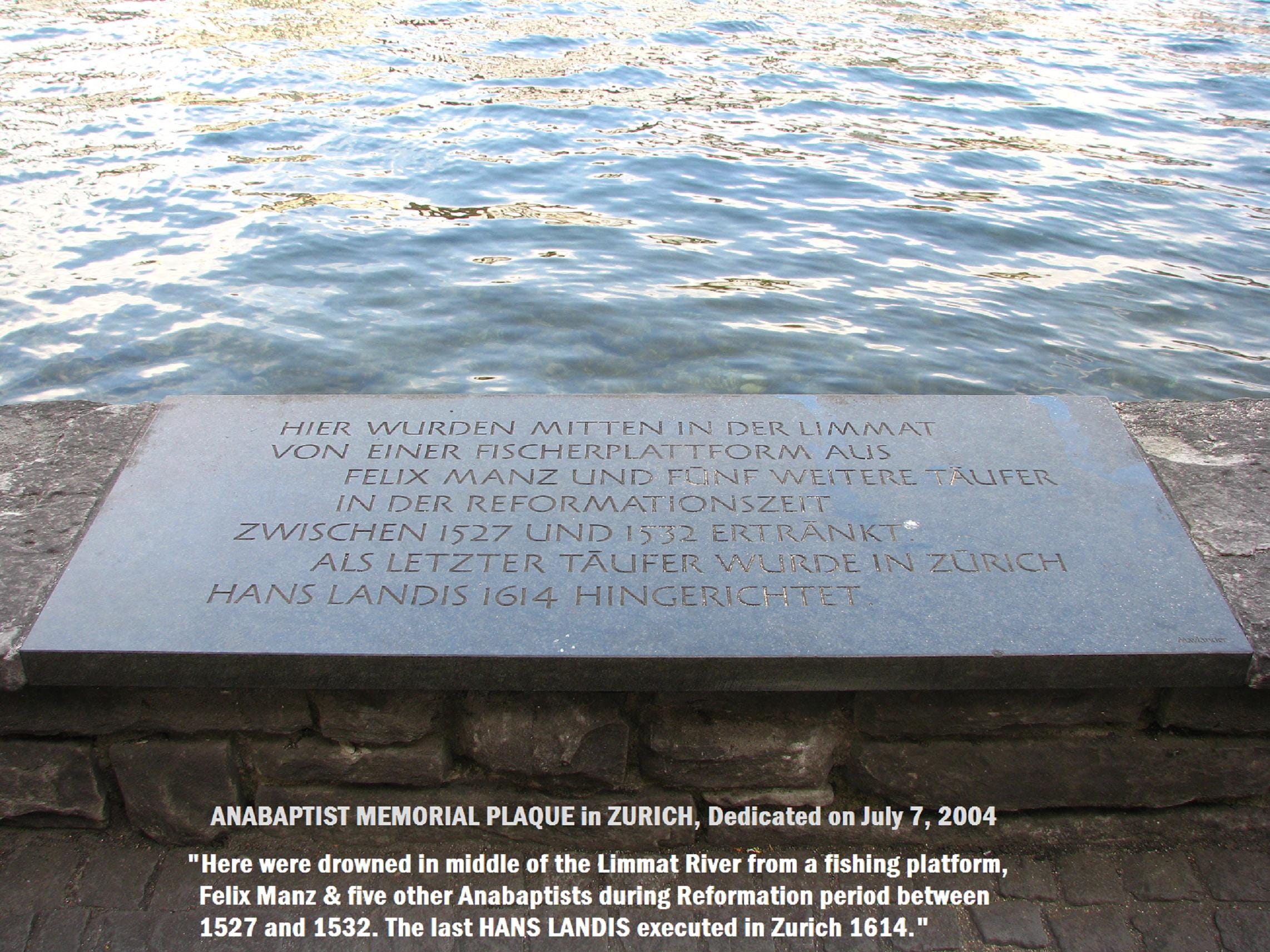
My dad’s side of the family is also part of the American story. We trace his lineage back to Hans Landis. Well, not technically. His brother, my predecessor, fled because Hans was beheaded. Hans was the last Swiss martyr, put to death because he was Anabaptist. Both Protestant and Catholic church leaders persecuted the Anabaptists. They were easy prey with their pacifist views. In 1613 Landis was arrested for propagating his beliefs and arrested. He subsequently escaped to continue his work, only to be re-arrested in 1614 and put to death on September 30th of that year.
Hans’ two brothers would flee across Europe, eventually (in the early 1700s) ending up in Pennsylvania where the governor, a Mr. William Penn, offered religious freedom to all. They became a part of the Church of the Brethren, called Dunkers because, of course, they did baptism by immersion, not sprinkling. This tribe would go on to marry into the Forney’s, a prominent family in Somerset, County, Pennsylvania, and the Bloughs.
My grandfather’s middle name was Blough, taken from his mother’s maiden name. Bloughs were evidently not as pacifist, as some of them served in the Pennsylvania militia. After a few decades of sojourn in Canada, the family settled in Minneapolis. This is where I would be born, at Saint Barnabas hospital, now a part of Hennepin County Medical Center. Two of my grandkids were born in the same building, overlooking the home of the Minnesota Vikings, possibly just down the hall from where I was delivered. Now, we are Floridians.
Why do people immigrate? I did a little research using AI. The number 1 reason by far is economic. They are seeking a better life. Following that is family reunification. People who move to be with their loved ones. The third reason is forced migration due to slavery, persecution, war, or famine. This order (economic/family/forced) is a relatively recent ordering. It has shifted through time.
As I look at the contemporary debates about immigration, I try to place my own family’s story into the debate. I am an American because of persecution and economics. I am in no position to judge those who are coming now for the same reasons. I should be able to relate to them as we share a common reason for coming to the US.
I am not making an argument for open borders. The world has changed. My opinion is that two factors are combining to challenge increased immigration to the US. The welfare state and the global wealth gap. When put together, the motivation for economic immigration is simply overwhelming and unsustainable. Until reform comes to one or both of these areas, there will need to be reasonable limits on immigration. The best example of this is the current fraud being uncovered in places like Minneapolis, LA, and Columbus. Culture, economics, and social welfare policies have combined to make this fraud possible. We may be at a point where we have to choose; you can either have expanded social welfare benefits, or you can have loose immigration laws. Achieving a balance between the two has proven elusive, both here in the US and in Europe.
There is a swath of missiology today that seeks to redefine missions around immigration. I believe that immigration will always be a part of how the kingdom spreads. We see that in the pages of the New Testament. For example, the diaspora synagogues became the starting point for churches in many different locations. Yet the New Testament commands sending. Jesus was sent to us. He commanded that others are sent, as the Father sent him. The apostles were sent to the nations. We see New Testament teams being sent across the Roman world, made up of Greeks and Jews. The pervasive presence of the nations in the entire Bible reminds us that our interface with others, as we preach and teach, will be cross-cultural. While the immigration theme is one we need to include in our understanding of how the God is working in our world, it is no replacement for obedience to the command of Jesus to go and disciple the nations - to be sent.
I once had this discussion with another ministry leader. We were talking about how reasonable or unreasonable it was to limit refugee resettlement programs. After a lengthy discussion, he said, “Regardless of how we view these policies, as believers it’s important for us to remember the person standing in front of us.”
He is right on. It was a reminder to me that it is easy to lose sight of the person in the midst of the politics. My family’s immigration story should make me be empathetic. My family came for the same reasons that people want to come today. I am here because of immigration. It is probably not unlike slavery. The question isn’t if we have immigration in our past, but rather how far back do we have to go to find that connection?
By the way, I do believe in baptism by immersion, so feel free to call me a dunker.
I am second-generation, as my mother came through Ellis Island from the Netherlands. She came with her family because of economic reasons. BUT they came legally. They came to contribute and become part of the Christian Reformed church as they settled in Michigan. They had a dairy farm in Galesburg, MI. They were part of a movement that established Christian Reformed churches all over the Grand Rapids/Kalamazoo region. The original members of my CRC had a zeal for sound doctrine and missions. That is all lost now, but I fondly remember those first-generation founders of my church in Kalamazoo and their zeal for missions.
In December 1524 the city of Zurich, under Zwingli's leadership, confiscated the Dominican and Augustinian monastic houses and forced all the monks and friars to lodge together in the Franciscan cloister. On April 14, 1525 the Mass was abolished In the meantime, however, the Reform party in Zurich had been irreparably fractured. Zwingli disagreed with the Anabaptists over the issue of infant baptism. The first adult rebaptism apparently occurred on January 21, 1525, when Conrad Grebel baptized (re-baptized) George Blaurock in Zurich. Zwingli knew Blaurock, a former Catholic priest, and the two men had shared their enthusiasm for the centrality of the doctrine of justification by faith alone. But rebaptism was viewed by Zwingli the authorities as blasphemous and seditious. The denial of infant baptism and the rebaptism of adults brought harsh penalties; it became a capital offense in Zurich on March 7, 1525, and four persons died as a result. Charles V made it a capital offense throughout the empire. Scholars estimate that at least 850 and perhaps as many as 5,000 Anabaptists were legally executed between 1525 and 1618 by burning, decapitation and drowning. From Steven E. Ozment's The Age of Reform (1250-1550): An Intellectual and Religious History of Late Medieval and Reformation Europe (New Haven: Yale University Press, 1980). 17.