
Indigenous Partnerships
A few items from a pre-event survey that are worth considering

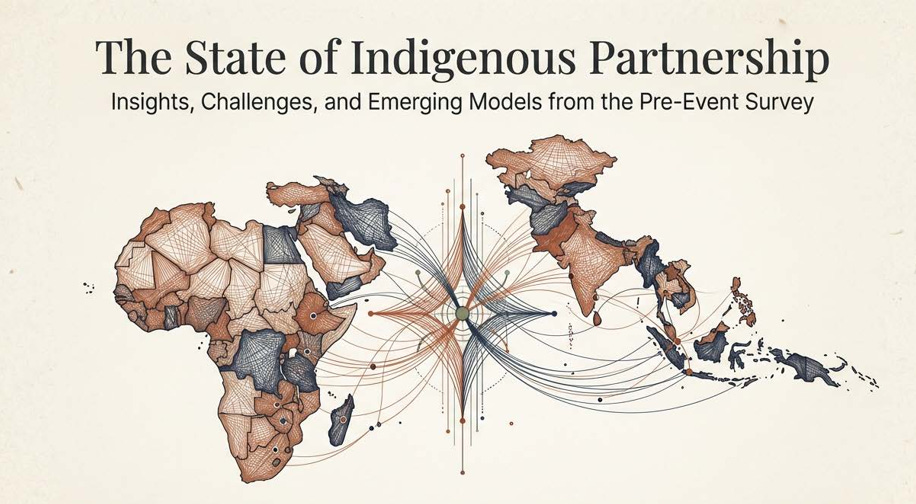
[AI produced the graphics in this article.]
Next week, the Missio Nexus team will be out in Phoenix, where we are leading an event for ministries whose primary focus is to resource indigenous mission agencies and church networks. My task is to do a presentation regarding the pre-event survey that shows various trends and observations from the group.
I have an entire PowerPoint generated from the pre-event survey using NotebookLM, but the only way you get to see that is to come to the event, which is now sold out! I cannot publicly share this due to security concerns (the report identifies people by name and therefore I cannot post it publicly). BUT… let me share three out of about 15 different points that I felt were helpful and relevant.
Who is at the table?
I find it interesting that there is the shift in who comes to an event like this. It used to be that there was a specific subset of ministries whose primary focus was supporting indigenous work. Separate from this group were the mission agencies that focused on missionary sending.
The shift has been that many of the traditional agencies now have a portion of their work dedicated to direct funding, training, and resourcing of indigenous ministry.
There was a book published back in the 1990s called “Passing the Baton” by Tom Steffen. The book talked about the need to hand the church over to nationals and exit the stage, leaving them in charge. It was a good corrective from missions that essentially stayed forever. Now, to be fair, this really was a problem that was fought and mostly won over a hundred years ago. You can go back and read some of the writings by missionaries from an agency called the CMS to see that they were arguing then that indigenous people needed to be put in charge early on. Yet, like in any human endeavor, the purity of the best models was often lost to the expedient models. It was just easier to leave foreign missionaries in place. Thus, Tom Steffen’s book was a reminder that one of our goals is to plant the indigenous church and put the indigenous church leaders in charge.
What has changed is that now most missionaries that are sent out do not have the end goal of leaving, per se, but of ongoing partnership with their indigenous counterparts. To be fair, I think Stefan also argued this, but the concept has sunk in and become much more advanced than it has been in past years. Overall, I think this is a really positive sign.
Recognition of a “Doom Loop” Surrounding Employment
One of the attendees wrote in the pre-event survey, “We’ll send money; you do the work… That’s not partnership; that’s employment.”
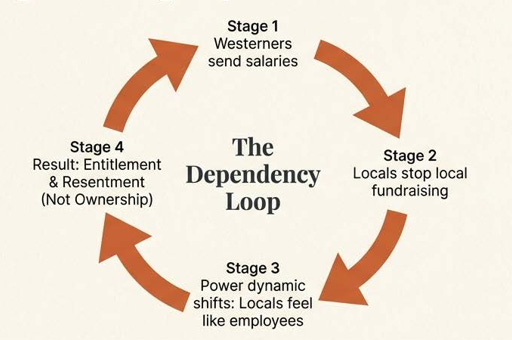
Some organizations have fully embraced the employment of indigenous staff. They would argue that there is nothing wrong or different than having a staff member with a passport other than the passport country of the organization. Others view this as creating unhealthy dependency.
I do think that this four-stage dependency doom loop depicted in this chart is fairly accurate. The dilemma that organizations face is that the most significant resource in ministry is the human resource. Thus, paying for salaries rises to the top as a need in many indigenous ministries. Yet it will create a relationship that not many indigenous organizations want to carry on an ongoing basis. This is a dilemma most indigenous partnerships will face at some point in their development.
A Shift in Expectations
A healthy call for earlier participation by indigenous leadership earlier in the process has the potential to make these relationships more mutual.
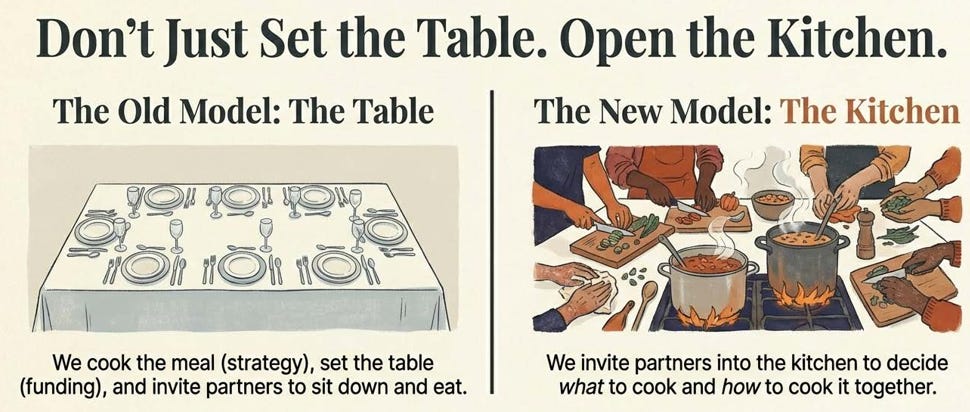
A quote from an attendee: “It might not be best for the cross-cultural agency to make these decisions and then invite indigenous leaders to the prepared table.”
This is not as easy to do as it sounds. There is a prior question of trust. There are many cross-cultural communication differences that go far beyond what most people are able to recognize. There is a paradox here: relationship building takes time, yet we want to push strategy discussions early into the conversation. Another reality is that any donor-recipient seeks to understand what the funder is motivated by, and then they plan their presentation around that motivation. I am not suggesting that this is done nefariously. Most major donor fundraisers ae trained to understand the need and desires of that donor and do their best to meet those expectations. This is not a facet of indigenous versus monocultural resourcing, but it certainly affects indigenous organizations raising money. This is complicated by cross-cultural miscommunication.
Not the Only Way, but a Good Way
Resourcing Indigenous Mission is a growing segment of the global missions movement. In some ways, we have oversold it as a silver bullet. It comes with a whole set of unique opportunities and problems. As the Global South Church is able to grow its capacity, I am sure we will see more and more of this kind of ministry.
One danger is what I call the “mercenary effect.” Imagine if all our wars were fought by people that we hired and that we had no skin in the game. Fortunately, Missionary sending goes hand in hand with sending financial resources. These are not competing strategies but are able to work together for the best possible outcomes. So long as the sent missionary understands their role.
Our group of about 60 convenes next Tuesday in Phoenix, Arizona. Please pray for these precious few hours of face-to-face interaction.
Good timing as I am in meetings today overseas discussing this topic.
Ted... I know you know this, but of course this is really in the DNA of who we are at Crossover Global... our team is completely made up of global representation from the top to the bottom... Almost all of our meetings involve significant translation... Good stuff. I hope the meetings go extremely well!!!